
The struggle to stop slavery
An early attack on slavery
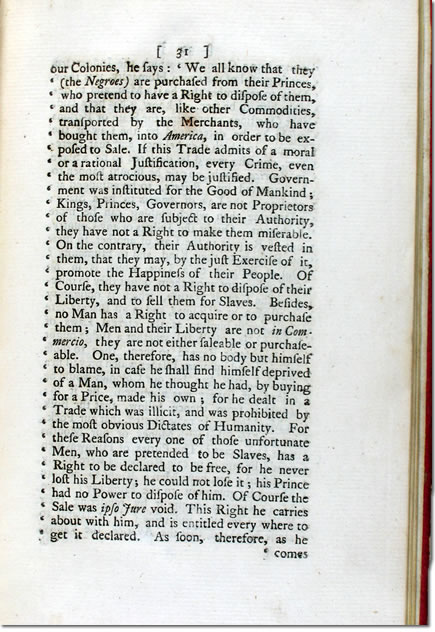
Extract from A short account of that part of Africa, inhabited by the negroes by Anthony Benezet, 1768. (DUL ref: Bamburgh O V 13)
Arguments against the institution of slavery first started to be heard in the 1760s voiced by men such as Granville Sharp and Anthony Benezet. The stance they took was simple: men and their liberty were not commercial products and therefore should not be sold. Today this belief is enshrined in the Universal Declaration of Human Rights but in the 18th it was far from being accepted. Indeed, it was not until the 1780s that popular interest in the anti-slavery movement started to awaken.
The view of Granville Sharp
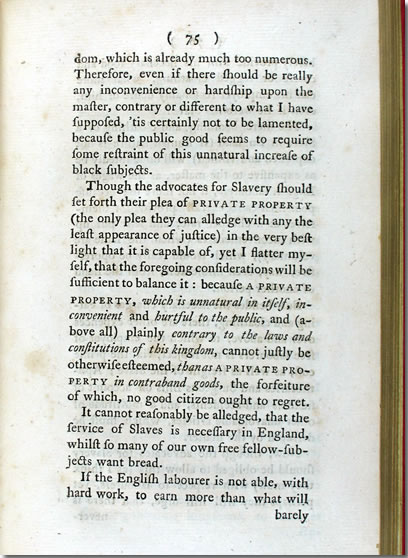
Extract from A representation of the injustice and dangerous tendency of tolerating slavery by Granville Sharp, 1769. (DUL ref: Bamburgh O V 17/1)
Granville Sharp was one of the first people in this country to speak out against slavery. Born in Durham, he moved to London and eventually took up a post in the civil service. In 1765, Sharp was at his surgeon brother’s house when a black man called Jonathan Strong arrived. Strong was a slave who had been very badly beaten by his master, David Lisle, and was close to death. Sharp and his brother took him to hospital where it took him four months to recover. Once in full health, Lisle paid two men to recapture Strong. Sharp argued that since Strong was in England he could not be a slave since slavery did not exist in this country. In 1768, the Court accepted this argument and ruled in Strong’s favour. Sharp later took up the cases of other slaves such as Thomas Lewis and James Somersett and in 1787 founded the Society for the Abolition of the Slave Trade with Thomas Clarkson. |
The moral impact on all involved in the slave trade

Extract taken from Substance of the debate in the House of Commons, on the 15th May, 1823, on a motion for the mitigation and gradual abolition of slavery throughout the British dominions, 1823.
The anti-slavery campaigners were keen to point out the impact of slavery not only on the slaves but on all those involved in the trade. In this extract, the author writes that slavery causes men to become cruel and tyrannical. Slave owners become more and more terrifying and merchants become blood-thirsty pirates. The only way to end the suffering of all concerned is to put an end to slavery.
An economic argument
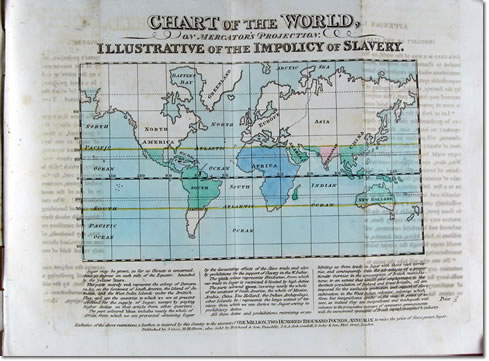
One of the most common arguments used by the pro-slavery movement to defend slavery was to draw attention to the economic benefits that derived from it. Much of their literature refers to the value of the West Indies trade and its importance to the maritime industry. The anti-slavery campaigners tried hard to refute these arguments knowing they would hold sway with Parliament.
This map was used by the anti-slavery movement to show that the duties used to protect the sugar producers of the West Indies made little economic sense.
Rebellion on board a slave ship
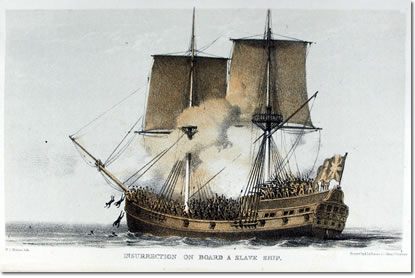
Illustration of an insurrection on board a slave ship taken from An essay on colonization, particularly applied to the western coast of Africa, with some free thoughts on cultivation and commerce by Carl Wadstrom, 1795. (DUL ref: Winterbottom + L45-46)
It is often easy to overlook the part played by the slaves themselves in the struggle to end slavery: their efforts overshadowed by the parliamentary campaigners and the actions of people in this country. However, this is a mistake. Resistance to enslavement often started on board the slave ships. Some slaves preferring to throw themselves overboard rather than endure enslavement. This caused many masters to shackle the male slaves together or to erect nets round the sides of the ship to prevent their escape.
The fear of a slave uprising
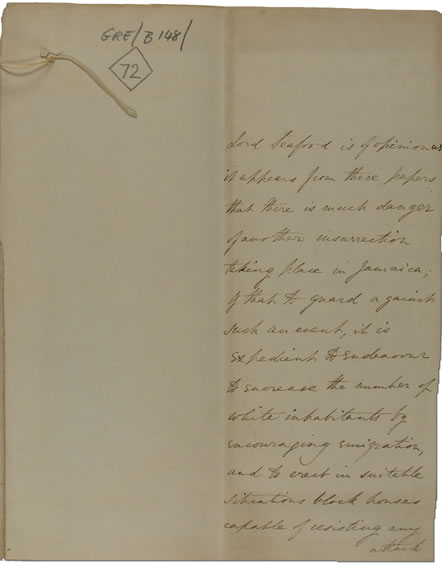
Memorandum mentioning the fear of a slave insurrection. (DUL ref: GRE/B148/72
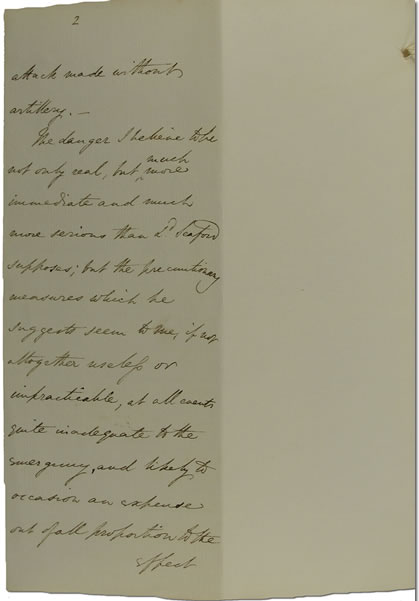
| Slaves were also capable of taking direct action once in the West Indies. In 1816 a slave called Bussa led a rebellion on Barbadoes and in 1823 another rebellion took place on Demerara. The biggest slave rebellion in the West Indies, however, took place in Jamaica in 1831-2. A Baptist preacher called Samuel Sharpe led 60,000 of the island’s 300,000 slaves in rebellion. During the rebellion and its immediate aftermath, it has been estimated that over 500 slaves were killed, 14 whites lost their lives and over £1 million worth of damage was caused to property. The rebellions understandably caused consternation in the islands as this memorandum from 1832 demonstrates. |
Action taken by the slaves
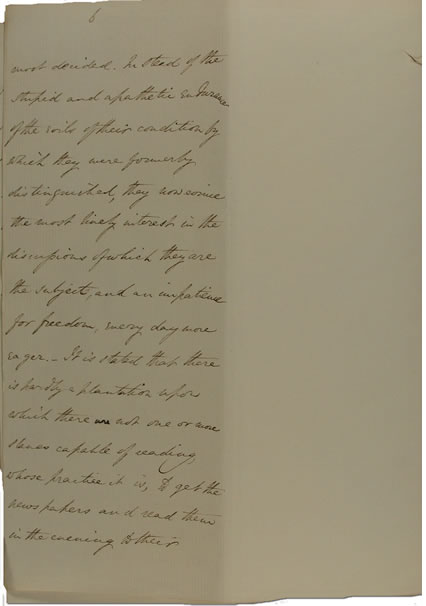
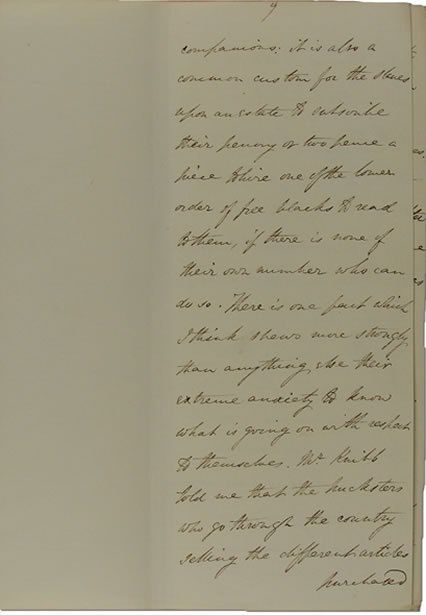
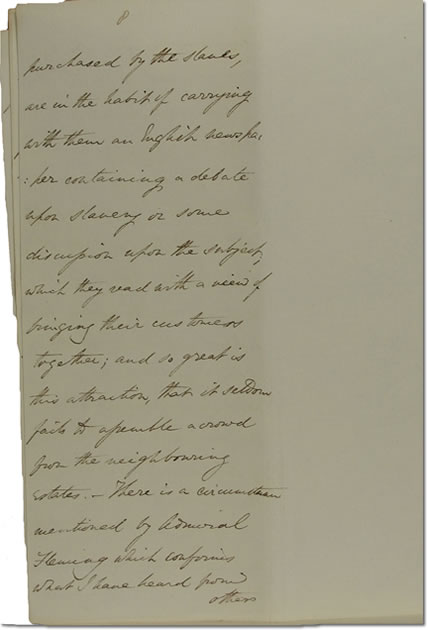
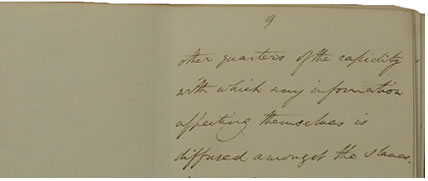
That the slaves were not just passive victims but prepared to agitate for their freedom is clear. As well as taking part in large-scale rebellions, other acts of defiance became increasingly commonplace. One tactic easily adopted was a go-slow. It is also clear that the slaves took an active interest in what has happening, as this letter demonstrates. Aware of the parliamentary campaign back in England, the slaves took every opportunity to find out about its progress via the newspapers.
An anti-slavery meeting in Darlington, 1814
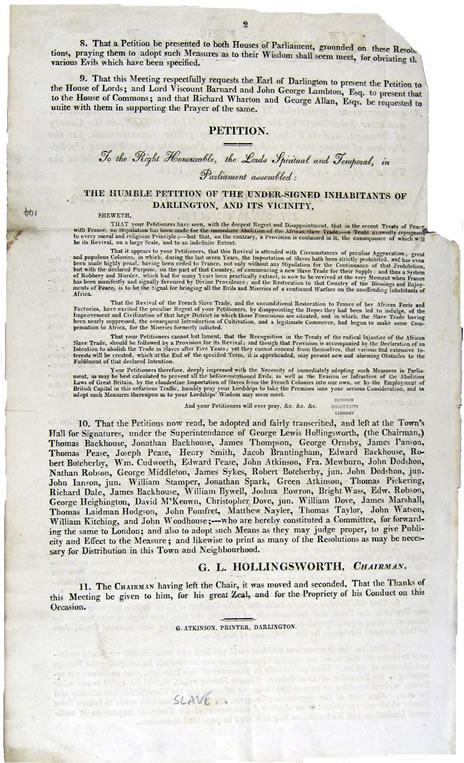
Poster advertising the resolutions of an anti-slavery meeting held in Darlington, June 1814. (DUL ref: XLLL DUR/COU/BEL/44)
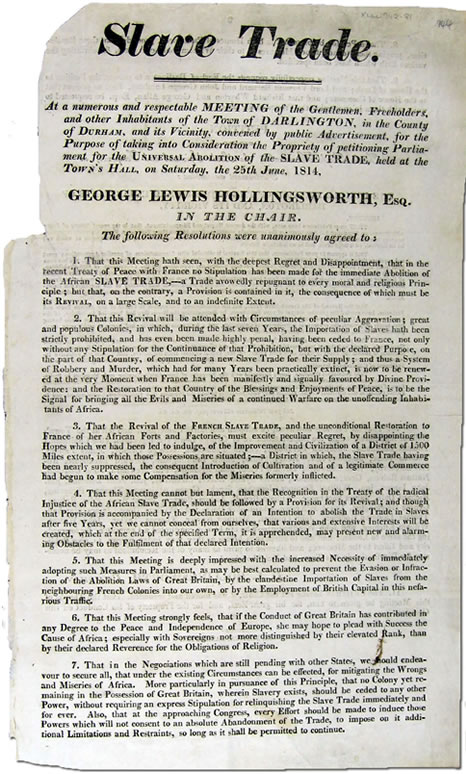
Anti-slavery sentiment in this country started to grow in earnest in the 1780s. Much of this was led by the Society for the Abolition of the Slave Trade which was founded by Granville Sharp and Thomas Clarkson. As well as pushing the issue forward in Parliament, the Society encouraged action in the country. In 1788 it organised its petitioning campaign and over 100 petitions were presented to Parliament complaining about slavery. A second campaign in 1792 resulted in the presentation of 519 petition. Support waned somewhat in the 1790s as Britain concentrated on the wars with France but picked up again in 1806. Even after the act banning the trade in slaves was passed in 1807, the campaigning did not stop. This poster carries the resolutions of an anti-slavery meeting held in Darlington in 1814.
Petitioning by the people of Tynemouth
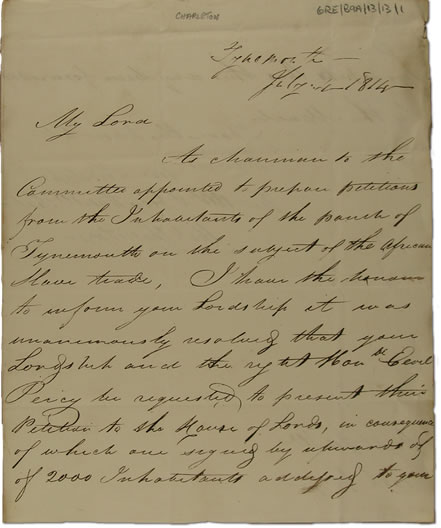
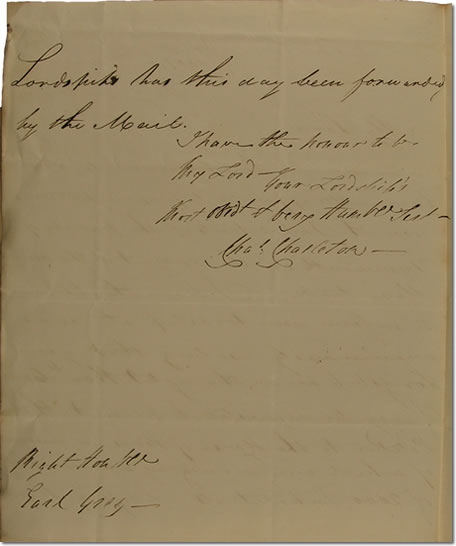
Petitions speaking out against slavery and the trade in slaves came from all areas of the country. This letter was sent to Earl Grey in 1814 by Charles Charleton saying that a petition signed by over 2000 inhabitants of Tynemouth would be sent to Earl Percy.
An anti-slavery meeting in Durham
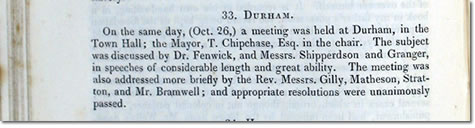
Entry from the Anti-Slavery Reporter detailing a meeting held in Durham. (DUL ref: Sunderland Friends 1261)
The Anti-Slavery reporter, published monthly by the Anti-Slavery Society, often contained details of meetings held across the country. This entry refers to a meeting held in Durham in 1826. The North East is an interesting area. In many respects it had little contact with slavery – there were no slave ports for example – but it was vehement in its support to end slavery.
Early attempt at fair trade
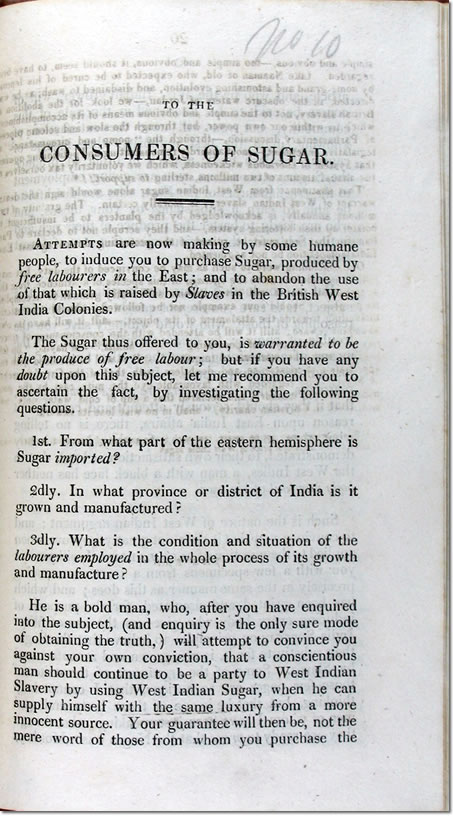
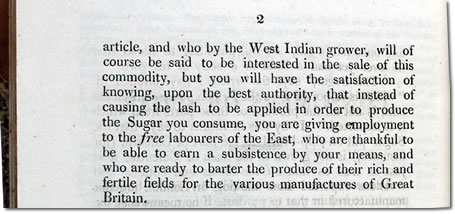
Meetings held to demonstrate support for the anti-slavery campaign were not the only way that people in England could help the cause. Supporters were encouraged to boycott slave-produced products. This pamphlet contains information for the purchasers of sugar and a list of questions they should ask to ensure that the sugar they buy is the produce of free labour.